
10 Years Z-Kubator
Best viewed on larger screen
Zurich University of the Arts · ZHdK

The First Ten Years of Z‑Kubator

Entrepreneurship, Careers & Innovation at the Intersection of Art, Design and Business 2016–2026

Est. 2016Zürich, CH
Scroll
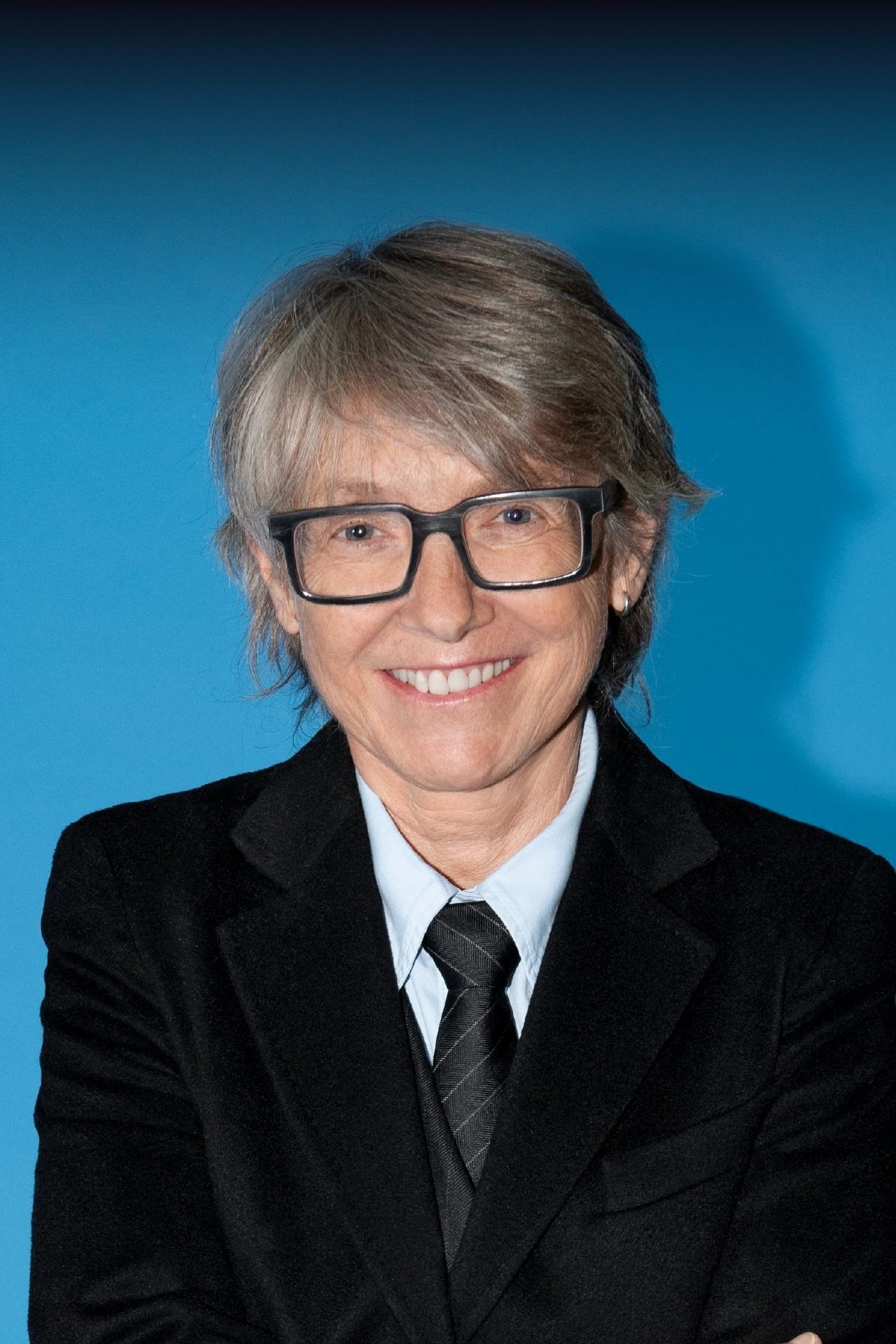
Karin Mairitsch
Karin
Mairitsch
President · Zurich University of the Arts

Dear readers,

Ten years ago, Zurich University of the Arts created an incubator for the arts and design. What began as an outgrowth of the research project "Cultural Entrepreneurship" became, in 2016, a dedicated support centre for creative practitioners: the Z-Kubator. The decision to invest systematically in the entrepreneurial potential of artists and designers was anything but obvious at the time. Today, looking at what this small team has achieved in a single decade, I can say with conviction: it was one of the most forward-looking decisions this institution has made.

As an artist myself, someone who studied painting and has experienced firsthand the tension between creative practice and economic reality, I know how essential it is for arts graduates to find their own path into professional life.

The outdated notion that art school graduates face a binary choice between pure artistry and unemployment needs to be put to rest.

ZHdK graduates are in demand across a wide range of fields – as designers, cultural entrepreneurs, curators, founders, and creative leaders. What we see in the Z-Kubator's alumni network is living proof of this.

The creative industries are an enormously significant economic force. According to the Zurich Centre for Creative Economies, roughly every eighth employed person in Switzerland works in the creative economy. Zurich is Switzerland's creative capital: nearly one in three of the country's creative-industries jobs are located in the canton, and almost every fourth business in the city operates in the creative industries. In addition to this, a significant portion of creatives are embedded in other industries. The Z-Kubator plays a vital role in helping our graduates claim their place in this ecosystem.

Over the past ten years, the Z-Kubator has supported over 1,200 ZHdK members and alumni. The coaching and support programmes have stimulated approximately CHF 2.5 million in alumni fundraising, and seen its alumni launch professional activities in nineteen countries on four continents. The first-ever Minor in Entrepreneurial Thinking and Practice at a Swiss arts university, launched in 2024, is a direct outcome of the pioneering work done by the Z-Kubator team.

None of this would have been possible without the sustained commitment of our partners. I would like to express my deep gratitude to Zürcher Kantonalbank, our principal partner, whose generous and continuous support has been instrumental from the earliest days. Equally, the City of Zurich and the Righini Fries Foundation have been essential pillars of this work.

I believe that universities are increasingly becoming places of encounter – a third space alongside the workplace and the home, where social experience and intellectual exchange take on a particular intensity. The Z-Kubator embodies this idea. It is a space where artistic vision meets entrepreneurial thinking, where disciplines converge, and where graduates are empowered to shape their own futures.

This publication celebrates a first decade. It also marks the beginning of the next chapter.

Prof. Dr. Karin MairitschPresident, Zurich University of the Arts (ZHdK)
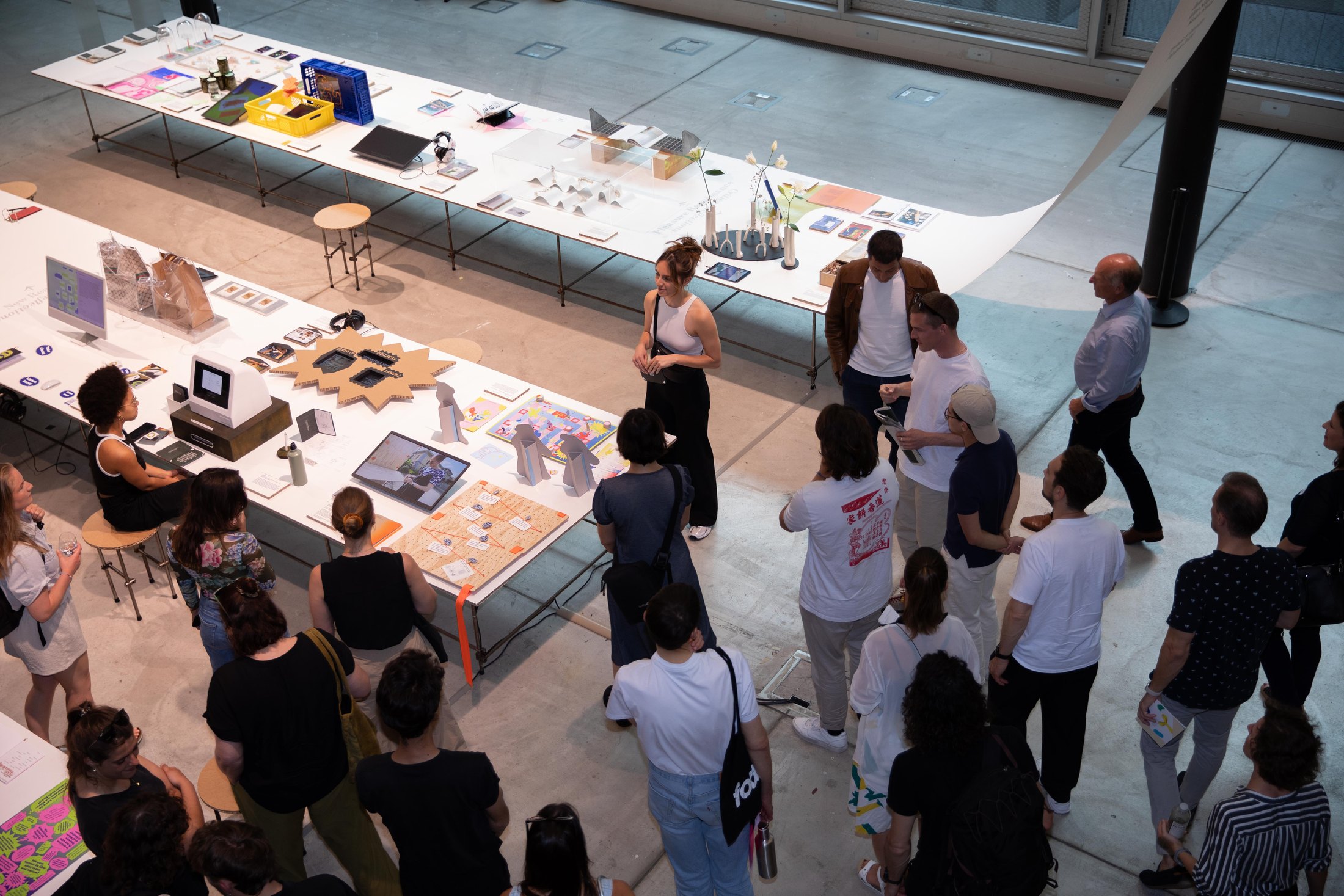
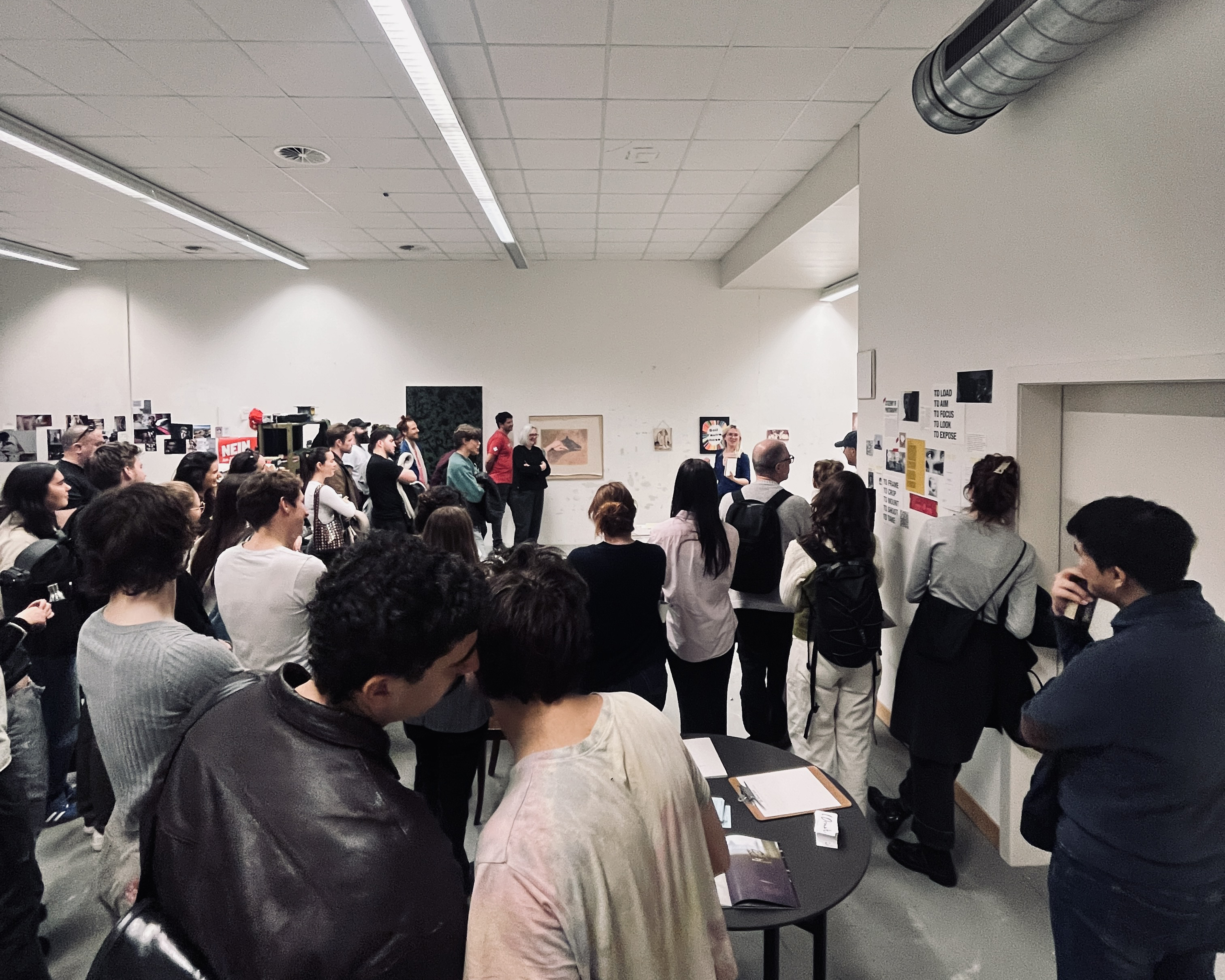
Open Studio Night 2026, Toni-Areal, ZHdK
Open Studio Night, February 2026, Mediacampus: What's next_Compass participants present their projects to an audience of mentors, alumni, and the public. Photo: Itay Blaish
Foreword
Shaping Perspectives: Ten10 Years of Z‑Kubator

Fifteen years at the intersections of arts, economy and policy – and the institution that grew from it.

Prof. Christoph Weckerle

When we began mapping the creative industries in Switzerland in the early 2000s, the standard categories did not fit. So we set out to chart the territory where artistic practice meets economic reality, looking for models that could bridge the gap between creative intuition and market dynamics. These insights became the foundation of what would, in 2016, give rise to the Z-Kubator. A decade later, those theories have become a lived reality.

For the Zurich Centre for Creative Economies (ZCCE), the Z-Kubator is our vital link to the real world. While others observe the creative sector from a distance, we are right there at the table. This proximity changes everything: our strategies come out of working directly with the people who shape it. This ensures our analysis is always grounded in the actual working lives of artists and designers.

In our ecosystem, the Z-Kubator acts as an agile laboratory. It is a swift, specialized unit where we test ideas that a large “mother ship” university such as ZHdK cannot always pilot quickly. Here, we have the freedom to experiment, pivot, and learn. This is where Strategic Creativity turns into action: creating new perspectives for the future to change the present.

Our vision of entrepreneurship is unique: Attitude over Method. We don’t teach business templates or “painting by numbers”. Instead, we empower people for wayfinding – the ability to navigate a world where the old maps no longer work. We celebrate diverse, personal paths over standardized careers.

Entrepreneurship at ZHdK is not about scaling for the sake of growth; it is about impact that aligns with our values. We see it as a regenerative practice – an attitude that turns uncertainty into agency and allows practitioners to shape society on their own terms.

Looking ahead, we are shifting from building foundations to expanding our impact. We are deepening our national and international networks to support the next generation of creative leaders globally. Our goal is to refine a specific “Z-Model” – a robust approach to creative empowerment that bridges education and practice even more effectively. By securing further third-party funding and strategic partnerships, we will ensure that our support remains as resilient and forward-thinking as the practitioners we serve.

The past decade has proven that creative practice is a powerful force for building the future. We are excited to continue this journey with those who don’t just describe the world, but dare to reshape it.
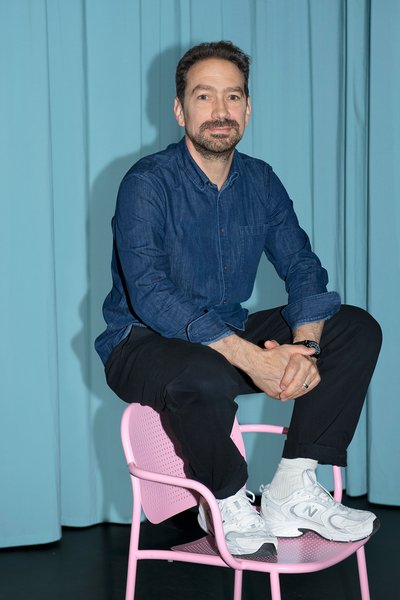

Prof. Christoph WeckerleFounder, Zurich Centre for Creative Economies (ZCCE) · ZHdK
Philipp Kotsopoulos
Philipp KotsopoulosHead of Z-Kubator · ZHdK

Dear readers,

In this report we reflect on 10 years of

support,
meaning,
encounters,
connections,
collaborations,
conversations,
mentorships,
exchanges,
processes.

All this is fueled by an incredibly skilled and engaged team and supported by Zürcher Kantonalbank, the City of Zurich, and Righini-Fries Foundation as trusted partners.

Thank you to everyone who has been involved during the past 10 years.

The report is also meant to serve as a conversation starter – I look forward to hearing from you to discuss where the next 10 years could take us and how you can get involved.

Philipp KotsopoulosHead of Z-Kubator
10 Years! Z-Kubator
The Decade in Numbers

Ten Years of Empowering Creative Careers

Since 2016, the Z-Kubator has supported hundreds of artists, designers, and creative entrepreneurs at the Zurich University of the Arts through coaching, incubation, and a growing alumni network.

0
Coachings & consultations
One to One · 2017–2025
0
What's next Alumni across 15 cohorts
Compass + Project · 2017–2026
0
Participants
Across all programmes · 2016–2025
0
Coaches, mentors, experts, jury members & collaborators
All programmes · 2016–2025
0
Total alumni fundraising
Compass CHF 1.57M + Project CHF 995K
0
Countries with Z-Kubator alumni activities
4 Continents
0
Female participants
Consistent across all programmes
0
Projects incubated in What's next_Project
68% continued · 58% incorporated
1 in 10
ZHdK graduates apply for What's next_Compass
80 applications 2024/25
Recognition
1 in 3
Winners of the Werkbeiträge 2025 of the Canton of Zurich completed our graduate programme What's next_Compass.
12 WINNERS FROM 224 APPLICATIONS
Pioneering
1st
Minor in "Entrepreneurial Thinking & Action" at a Swiss art university – students from art education, cultural critique, dance, design, film, fine arts, music, transdisciplinary studies, and theatre.
LAUNCHED AUTUMN 2024 · REPLACES SUMMER ACADEMY · 2 SEMESTERS
Gender Equity in Founding
50%
Female Founders
Half of all ZHdK (co-)founders are female, 2.5× the Swiss national average of 20%. Among them: Eliane Zihlmann, co-founder of Somebodyelse, a VR experience studio that makes nature tangible through immersive worlds, from bat echolocation to underwater ecosystems. A What's next_Project alumna (2021), Eliane now serves on the ZCCE Advisory Board.
43 START-UPS + 28 SPIN-OFFS SINCE 2011 · 4.7 INCORPORATIONS PER YEAR · 42% INTERDISCIPLINARY TEAMS · 4 EXITS
Eliane Zihlmann, co-founder of Somebodyelse, What's next_Project alumna and ZCCE Advisory Board member
What Our Alumni Have Raised
CHF 1.57M
What's next_Compass Alumni
14× PROGRAMME COSTS · 9 COHORTS · 2017–2025
CHF 995K
What's next_Project Alumni
MAX. SINGLE SUCCESS: CHF 240'000 · IMPACT FACTOR 2.2×
CHF 2.5M+
Combined Alumni Fundraising
TOTAL 2017–2025 · ALL WHAT'S NEXT PROGRAMMES
15
Coaching topics from funding to pricing
TOP: PROJECT BUDGETING · SELF-EMPLOYMENT
1 in 10
ZHdK graduates apply for What's next_Compass
2024/25 · 80 APPLICATIONS (RECORD)
2.2×
Impact Factor WN_Project
1100+
Individuals coached one-to-one
2017–2025 · ALL DISCIPLINES
10+
Media features per year
SRF · TAGESANZEIGER · SAT.1
Interdisciplinary Reach

All Disciplines, One Offering

The Z-Kubator serves every department at ZHdK, from design and fine arts to music, theatre, dance, and film.

Design36%
Fine Arts21%
Music11%
Art Education & Cultural Critique10%
Theatre6%
Transdisciplinary Studies4%
Film3%
Dance1%
Other Platforms8%
Tap a segment to see the discipline
Based on 1,200+ participants across all programmes 2016–2025

A Decade of Building

Key milestones from the founding of Z-Kubator to today.

Before the Z-Kubator · 2012–2016
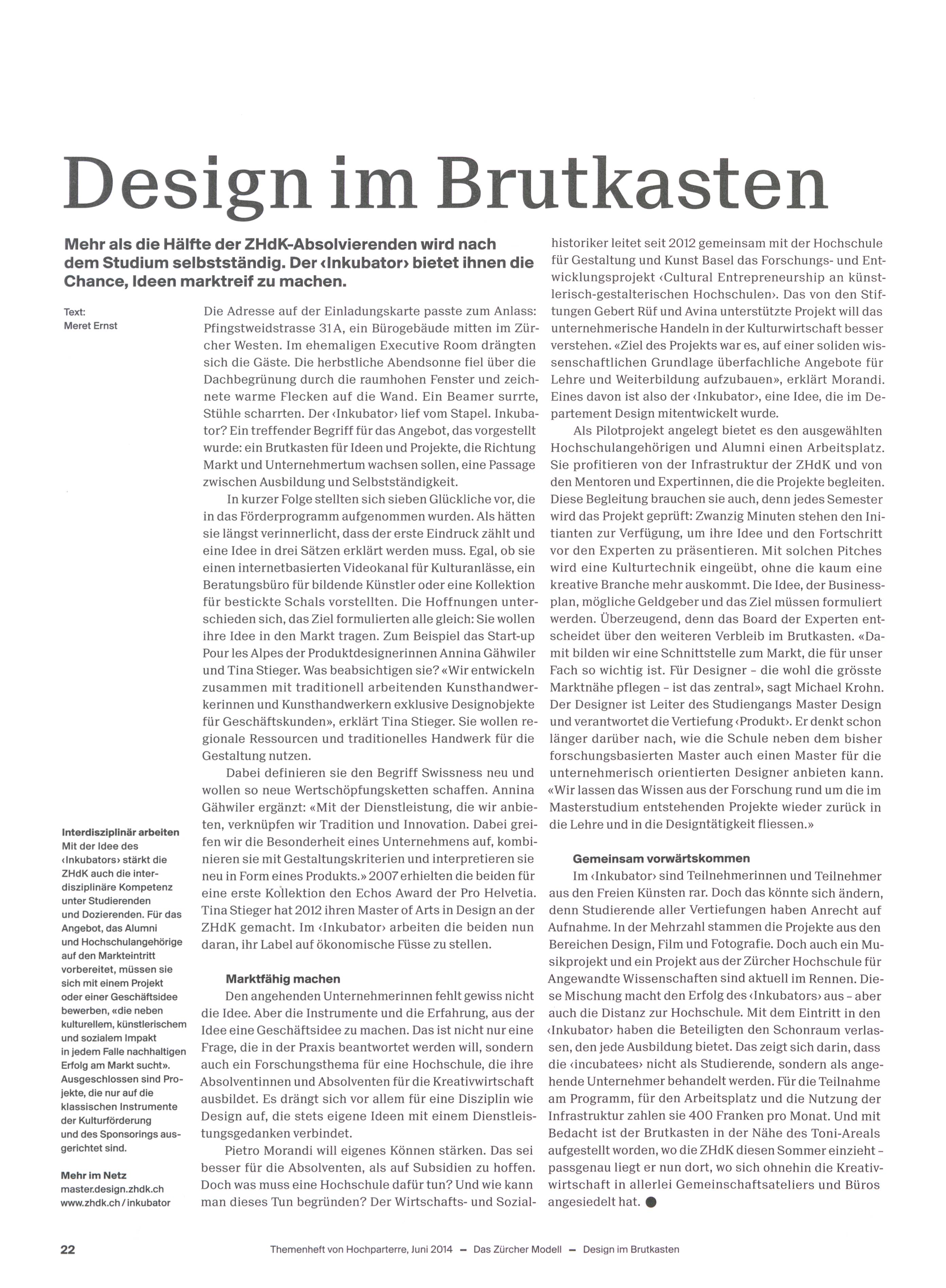
In 2014, Hochparterre magazine described early entrepreneurial support programmes at ZHdK as 'Design im Brutkasten'.
Before the Z-Kubator

From Research to Practice

Entrepreneurship at ZHdK did not start in 2016. Several initiatives preceded the Z-Kubator and ultimately led to its conception.

2012–2025 · Z-MODULES

5–6 one-week elective courses for bachelor's students, dedicated to entrepreneurship, offered twice a year until the introduction of the Minor in 2024.

2012–2014 · RESEARCH PROJECT

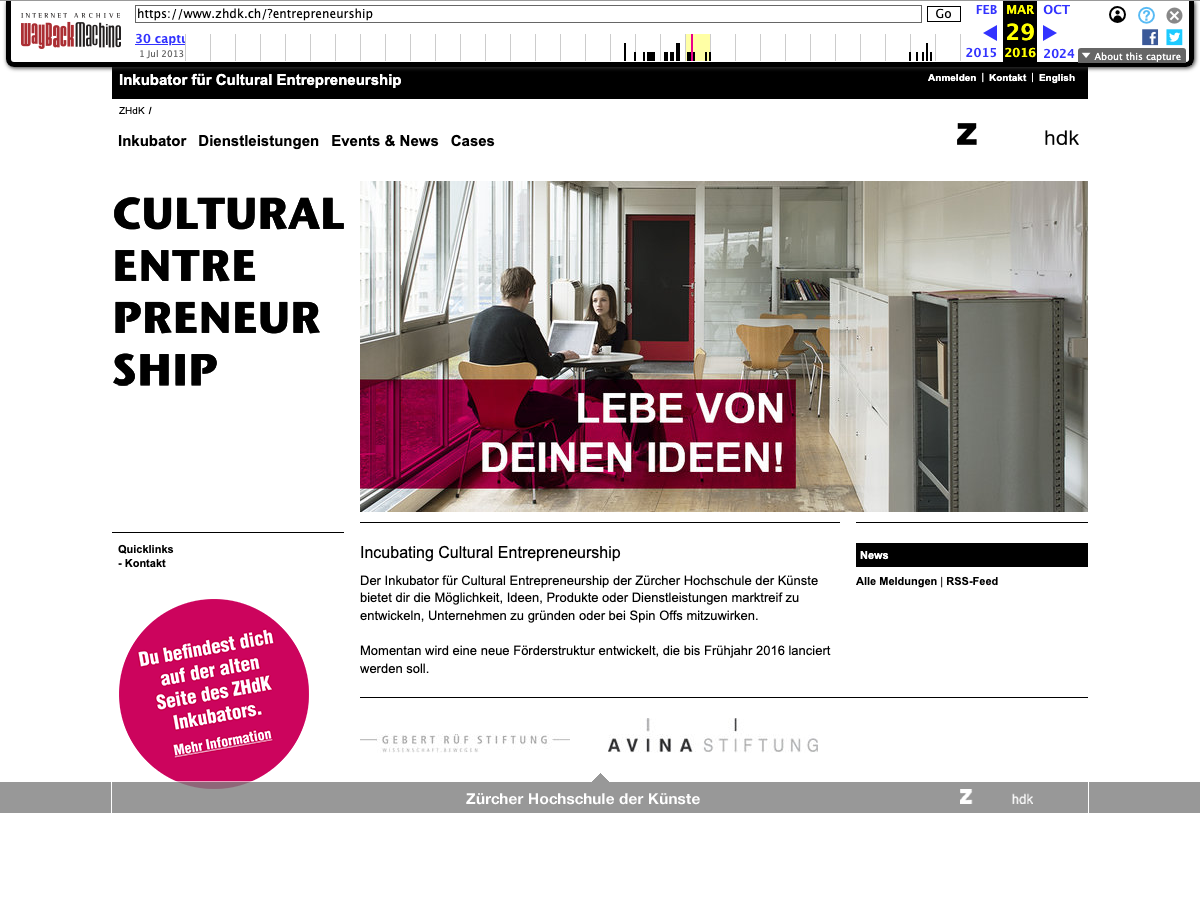
Cultural Entrepreneurship Education Programme at the Department Cultural Analysis, funded by Avina Foundation and Gebert Rüf Foundation, conducted with the Basel Academy of Art and Design. The project investigated how arts universities can support entrepreneurship: a concept for entrepreneurship education, an incubator, a publication, and a nation-wide university network.

2012 · STUDIO SPACE

The City of Zurich, Migros-Kulturprozent, and the Department Cultural Analysis jointly opened subsidized studio space for ZHdK graduates at Migros Herdern. Continued by the Z-Kubator from 2017, now an integral part of What's next_Compass.

The First Ten Years · 2016–2026
2016
Z-Kubator launches at ZHdK with the first Summer Academy with 12 students (2-week intensive sprint), open to all disciplines. Participation in the jury of the international innovation competition Falling Walls Lab Switzerland with ETH Zurich, UZH, ZHAW, Empa, and Hirslanden.
2017
Team is recruited, One to One Coaching and two alumni support programmes are launched: incubator programme for entrepreneurial projects and support programme for artist careers. Studio space at Migros Herdern is taken over from ZHdK Z+, financed by City of Zurich and Migros-Kulturprozent. The Z-Kubator represents ZHdK as a new member of the Startup Campus consortium which organizes Innosuisse-backed entrepreneurship training for members of all Swiss universities.
2018
175 coaching sessions. "Z-Kubator lädt ein" lunch talk series begins (200 participants). External evaluation leads to permanent status within the Creative Economies cluster. Launch of the new Innovators Camp format with University of Zurich Innovation Hub – for the first time attracting students and researchers from ETHZ, UZH, PH Zurich, and ZHdK. Z-Kubator showcase at the Zurich Maker Days and Criterion Festival featuring les solides and Yael Anders.
2019
Z-Kubator becomes part of the newly founded Zurich Centre for Creative Economies (ZCCE). Zürcher Kantonalbank joins as founding partner. International network grows: Glasgow, Utrecht, Weimar, Singapore, Porto, Budapest, Rotterdam, Tallinn. Z-Kubator showcase at Digital Festival. First ZHdK Founders Get-together with 44 participants at Toni Campus. The Z-Kubator initiates the first elective module dedicated to Blockchain technology at ZHdK.
2020
COVID-19 rapid response: emergency resource website (7'000 visits), virtual talk series (842 registrations). All-time high of 188 coaching sessions. What's next_Project is relaunched and provides grants to ZHdK graduates sponsored by Zürcher Kantonalbank. The initial cohort includes 5am Games, Age Lab, and Futuress. A virtual visit to the Z-Kubator and its programme participants is produced for the digital ELIA Conference hosted by ZHdK.
2021
200+ ZHdK members supported, 63% female. 49 What's next alumni across both programmes. What's next_Compass studios relocate to Mediacampus Zurich with continued support from the City of Zurich. Z-Kubator becomes co-host of the annual Visarte workshop "Die Kunst der Steuererklärung".
2022
Righini-Fries Foundation joins as a supporter of What's next_Compass. ZHdK Startup Finder launched with verified data on 50+ startups and spin-offs. The first Open Studio Night at Mediacampus draws 60+ visitors. The "Creative Growth Mapping" method, developed at the School of Innovation and Technology, The Glasgow School of Art, is incorporated into the Z-Kubator programmes and further refined in a series of pilot workshops.
2023
First «NewKammer: A Showcase of New Talent» exhibition at Atelier Righini-Fries – institutional visibility for emerging alumni. 9 lunch talks, 235 participants. Record 66 applications for What's next_Compass. "Z-Kubator What's Up" blog launched with What's next alumni portraits. Annual career preparation module for the BA Cast/Audiovisual Media's graduating class. Jury participation in the first DIZH Founder Call.
2024
Launch of Minor "Entrepreneurial Thinking & Action", first at a Swiss arts university, replacing the Summer Academy. Record 80 applications for What's next_Compass. 10% of all ZHdK graduates apply.
2025
Project Chornozem by three ZHdK MA Interaction Design students wins Falling Walls Lab Switzerland. Z-Kubator organizes showcases at Creative Economies Forum – CEF Workshop 25, Zürcher KMU Innovationstag, and Zurich Design Weeks featuring What's next_Project incubatees. Z-Kubator keynote at the international conference "Creative Infrastructures in the Spotlight: Shaping the Future of Arts Entrepreneurship" at Aarhus University. The 2nd cohort of the Minor "Entrepreneurial Thinking & Action" is fully booked and one of the most popular Minors at ZHdK.
2026
10th Anniversary. 134 What's next_Compass alumni across 9 cohorts, 19+ projects incubated, CHF 2.5M+ fundraising. 1'500+ coaching sessions since 2017. Alumni activities in 19 countries on 4 continents. 400+ coaches, mentors, experts, jury members, guest lecturers, and collaborators. 40+ collaborations.
Ten Years of Creative Entrepreneurship in Perspective

Creative Entrepreneurship at ZHdK

Read why creating art & design and creating a company overlap

Creative Entrepreneurship
at ZHdK

By Prof. Dr. Simon Grand · Zurich Centre for Creative Economies (ZCCE), ZHdK · University of St. Gallen HSG

Entrepreneurial engagement can become important for most creative practices. Such engagement in the creative field means proactively searching for performance spaces, laboratory settings and exhibition platforms, convincing relevant colleagues and trustworthy partners, as well as mobilizing the necessary resources. They are important to realize and perform and exhibit one’s own creations, be it in music or visual art, dance or research, gaming or theatre, journalism or design, curation or film. In individual projects, but also as a recurrent creative engagement over time.

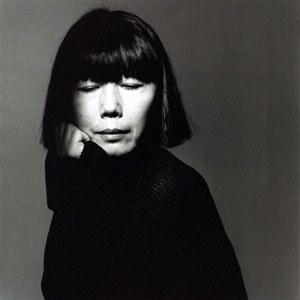
Studying entrepreneurial engagement in the creative field, we observe a multitude of different models and formats, networks and organizations to foster and sustain such creative engagement: as independent curators and journalistic ventures, theatre companies and art collectives, design agencies and gaming companies, production networks and research institutes. In the perspective of Strategic Creativity, a model developed by Christoph Weckerle and me, we identify different patterns and dynamics, which deserve attention to better understanding and enabling such creative entrepreneuring. Thereby, we benefit from an inspiring quote by Rei Kawakubo, the creative entrepreneur behind Comme des Garçons:

Rei Kawakubo, founder of Comme des Garçons

„My work takes place, where creating clothes and creating a company overlap: there cannot be one or the other.“

Rei Kawakubo · Comme des Garçons

Four Patterns

Thereby, my own scientific research, entrepreneurial experience and advisory practice allow to identify four dimensions, which are important to move forward with one’s entrepreneurial engagement, and which the Z-Kubator activates daily among a growing community of students and alumni.

01
Establishing a unique repertoire of creation practices
Gaining one’s own singular perspective and creative practice in a creative field requires the strengthening and establishment of a personal and distinctive repertoire of practices and attitudes, answering questions like: where resides my excellence? how does my creative work emerge? how do I advance?
02
Engaging for impact in relevant contexts
Our own creative claims often imply an aspiration to gain impact in a relevant context, be it cultural, societal, ecological, economic or technological. To successfully create value for oneself and others, whereby success and value typically go beyond a purely commercial perspective.
03
Scaling-up / scaling-down practices and their impact
Entrepreneurial engagement requires to find a convincing way to sustain such engagement: as a solo artist or agency owner, theatre collective or tech venture. This raises questions of scaling-up into larger creative enterprises, for example in Creative Tech, or scaling-down, into a highly personal path.
04
Moving forward in an accelerating world
In an accelerating world, characterized by uncertainties and ambiguities, a constant focus of creative entrepreneuring remains to mobilize funds and partners, spaces and infrastructures, competences and technologies to sustain one’s own creative practice. A life-long process of inquiry and engagement.

Three Time Horizons

In this perspective, and especially in an accelerating world, a systematic temporal view is decisive. Christoph Weckerle and I propose to consider three time horizons simultaneously: the operational addresses the present – what must be done now, to make the next step. The strategic asks where we must invest, to make new things possible. The speculative, finally, asks: what if? … and projects into the future what might be desirable, that is not possible today: and how we can create such future possibilities.

Operational 0–3 years Strategic 5–10 years Speculative 12–15 years Present Future
The Future Cone – Basic Model 0.0 · Grand & Weckerle, Strategic Creativity (Wiley, 2025)

The Z-Kubator systematically addresses entrepreneurial thinking and acting for ZHdK students in all three horizons – from One-to-One coaching on immediate concerns, to the strategic career development of the Minor “Entrepreneurial Thinking & Action”, to the speculative ambition of the What’s next programmes.

If an arts university like ZHdK understands the importance of creative entrepreneurship and entrepreneurial innovation, it can make a difference, for its students and beyond. In the future, the expertise of the Z-Kubator team and the Zurich Centre for Creative Economies (ZCCE) will be leveraged for other creative and innovative contexts: for research at ZHdK, for alumni scaling their creative enterprises, for partners from other disciplines, or for other arts universities and cultural institutions.

What kind of world could your work help create?
Batvision – a VR experience that lets you perceive the world through bat echolocation. Built by Eliane Zihlmann, Raffaele Grosjean & Pascal Felber (Somebodyelse), What's next_Project 2021.
And this is how.

What's next

Two programmes, one mission: empowering ZHdK graduates to build sustainable creative careers, from first idea to independent practice.

What's next_Compass
Career Programme · 12 Months

A 12-month career programme for ZHdK graduates bridging the gap between university and professional practice.

J
F
M
A
M
J
J
A
S
O
N
D
Individual Mentoring Track · all year
Open Studio Night
Jury Selection
Kick-off Mediacampus
Cohort Start & End
«Creative Growth Mapping»
Workshops
Programme Tracks
Individual
Studio · Workshops · Events · Mentoring · Campus Card
Group
Studio · Workshops · Selected Events
Extension (+1 year)
Studio · Workshops · Selected Events
Core elements
Subsidised studio space at the Mediacampus, individual mentoring, group workshops, Open Studio Night, curated events, and the «NewKammer» group exhibition in partnership with Stiftung Righini-Fries.

Who can apply?
ZHdK graduates from every discipline: Design, Fine Arts, Music, Theatre, Dance, Film, Art Education, and Transdisciplinary Studies. In 2024/25, 1 in 10 ZHdK graduates applied (80 applications).
147
Alumni across 9 cohorts
14×
Return on programme costs
CHF 1.57M
Total alumni fundraising
Read more on zhdk.ch
What's next_Project
Incubator · 12 Months

An intensive incubation programme for ZHdK graduates developing artistic or design-driven projects with entrepreneurial potential. Launched in 2020, it provides expert coaching, mentoring, and access to seed funding – turning creative ideas into viable ventures. From 2026, the programme runs in two phases.

00
Application & Preselection
Open call with the What's next_CANVAS – an expert jury admits up to 8 projects
01
Phase 1: Validation
Three months testing entrepreneurial feasibility – workshops from business model to presenting, plus mentoring. The jury selects up to 4 projects
02
Phase 2: Incubation
Nine months towards self-sustaining implementation – a practitioner as coach, concluding with the final jury presentation
Focus areas
Business strategy, legal setup, fundraising, pricing, market positioning, and creative sustainability. Each project receives tailored mentoring from a pool of 40+ coaches and industry experts.
Track record
Of the 19 projects incubated since 2020, 68% continued their activity and 58% founded registered companies. Alumni include Joshua Amissah (Forbes 30 under 30 Europe 2025) and Tobias Gutmann (Face-o-mat / Sai Bot).

Impact factor
The programme has generated a 2.2× impact factor, with alumni collectively raising CHF 995'000 in external funding. The largest single success: CHF 240'000.
19
Projects incubated
58%
Founded companies
CHF 995K
Total alumni fundraising
Read more on zhdk.ch
The Z-Kubator Ecosystem

From Student to Founder

During Studies
Minor Study Programme "Entrepreneurial Thinking & Action"
(running yearly)
One-to-One Coaching
All Departments
Talks & Events
Lunch Talks · Founders Night · Workshops
What's
next
Compass
Career Programme · 12 Months
Studio space, mentoring, workshops, and exhibitions. From university to independent practice.
Apply
Kick-off
Develop
Show
Project
Incubator · 12 Months
Intensive incubation for creative ventures. Expert coaching, business development, seed funding.
Select
Incubate
Accelerate
Launch
During Studies Graduation Career Programme / Incubation
Our new Minor study programme

Entrepreneurial Thinking & Action

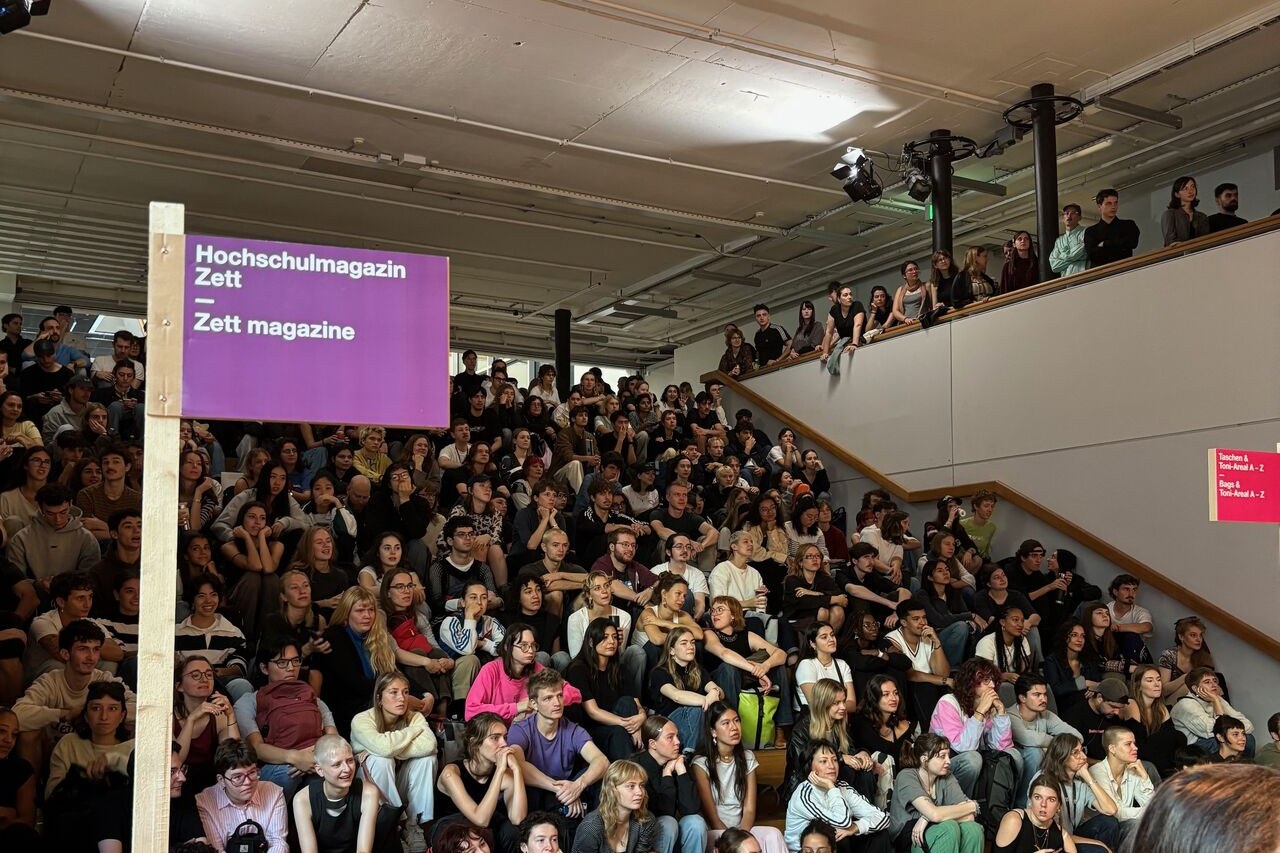
Semester start at ZHdK, Toni-Areal
Find out more
Semester start, ZHdK
One of our methods

Creative Growth Mapping

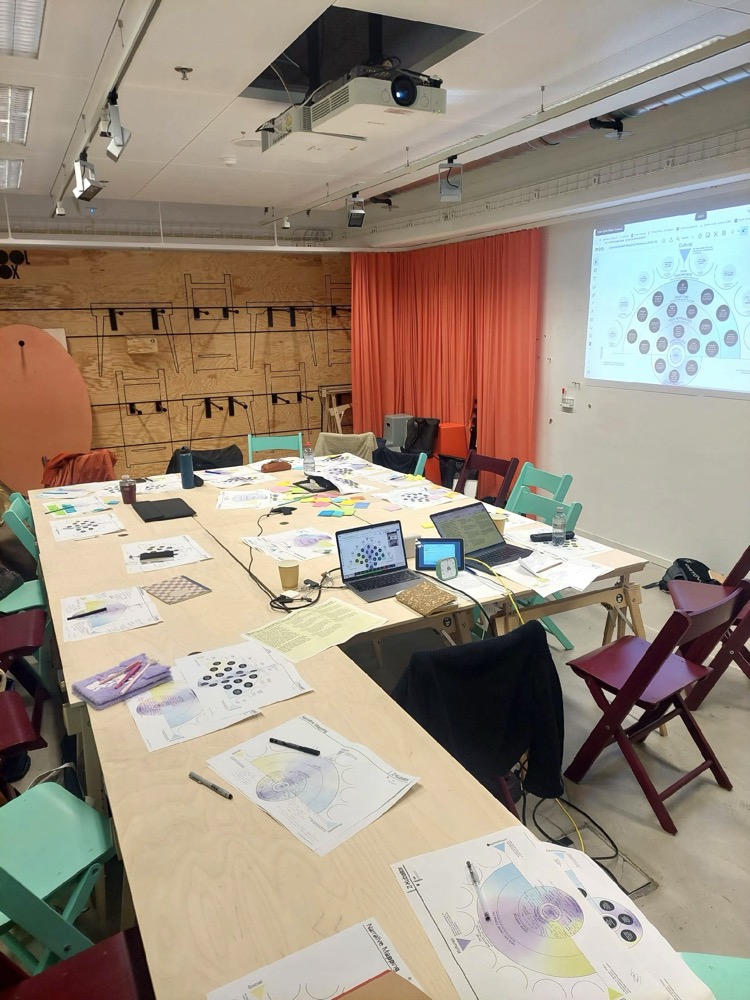
Creative Growth Mapping workshop, Toni-Areal, ZHdK
Explore the Creative Growth Map
CGM Workshop, Toni-Areal, ZHdK
One of our methods

Creative Growth Mapping

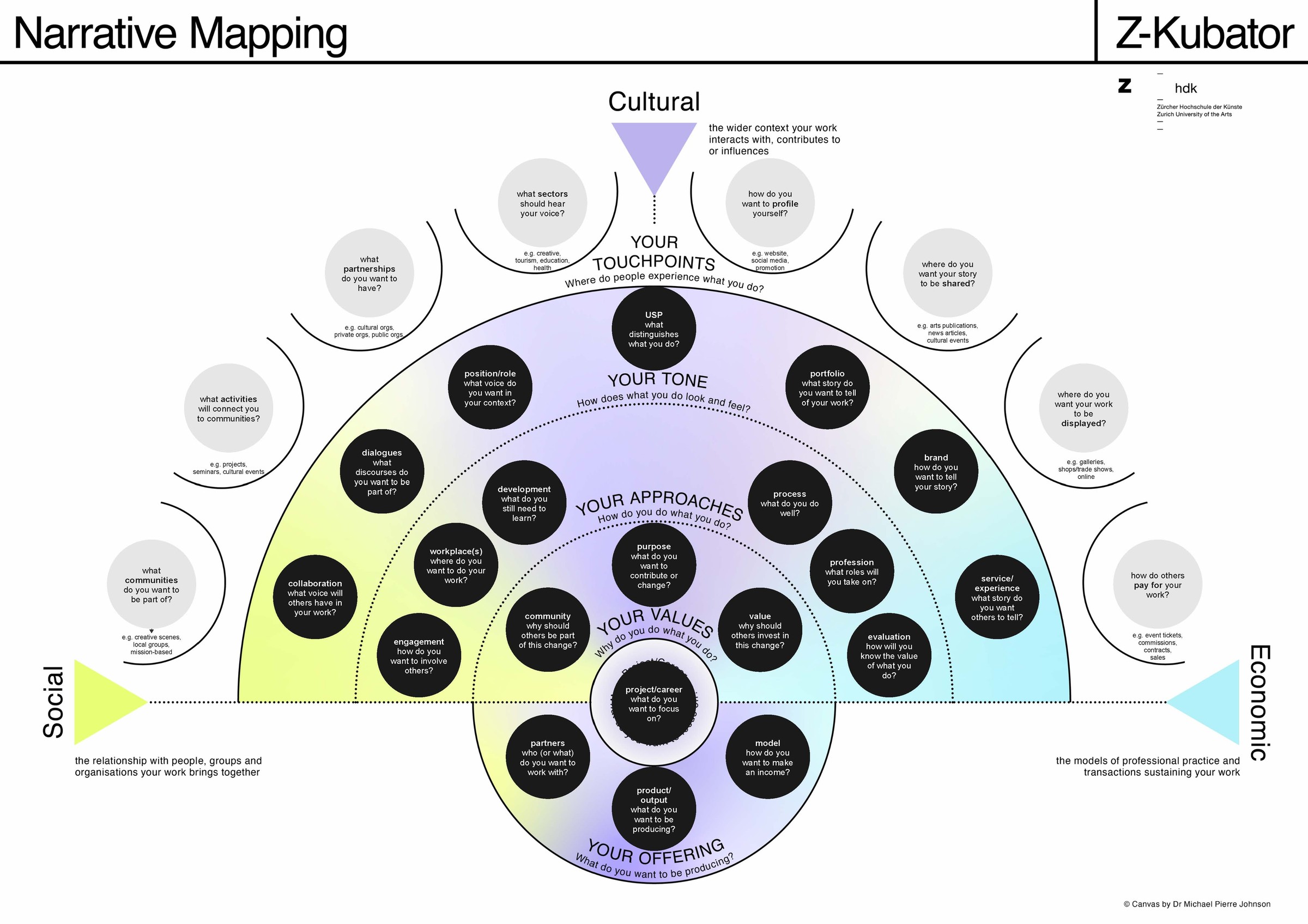
Creative Growth Mapping / Narrative Mapping canvas by Dr Michael Pierre Johnson
© Canvas by Dr Michael Pierre Johnson · Z-Kubator / ZHdK adaptation
Dr Michael Pierre Johnson
Innovation Leadership Fellow in the Creative Economy, School of Innovation and Technology, The Glasgow School of Art

The Creative Growth Model frames creative work in relation to the cultural networks they operate within by helping to highlight the range of interests or relations which different people, groups, organizations (or even things!) can have to one's work. Framing such interests (cultural as external, practice as internal, social as inputs, economic as outputs) emphasises the relationships that can be grown or developed around creative work, such as networks, knowledge, value and markets.

The Creative Growth Model was developed by Dr Michael Pierre Johnson, who researches the development and application of mapping and modelling methods to support and evaluate creative and cultural ecosystems regionally, sectorally and for green transitions.

In a collaboration between Dr Johnson and the Z-Kubator the mapping tools were tested extensively with students and alumni of ZHdK, and refined to meet their needs. Since 2022, the method forms the baseline of the "What's next" support programmes and the Minor "Entrepreneurial Thinking & Action".

Our new Minor study programme

Entrepreneurial Thinking & Action

The first Minor of its kind at a Swiss art university.

When Zurich University of the Arts introduced its new Major-Minor study model, it was far from obvious that art and design students would want to spend part of their degree on entrepreneurship. They do: since 2024 it has become one of the most requested Minors at the university, open to BA and MA students across all departments.

How students learn

Students apply entrepreneurial competencies to a project of their choice or their own artistic practice. Peer exchange, mentor feedback, and expert inputs sit at the core, combining on-site workshops with digital self-study.

2 semestersAll disciplinesSince 2024
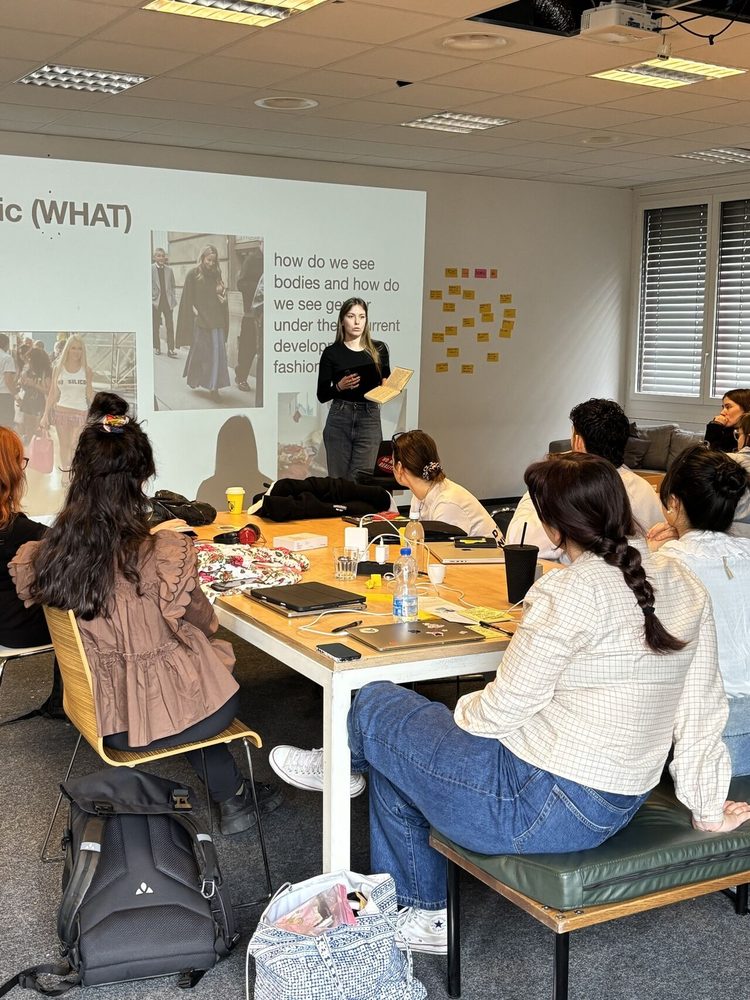
Minor Entrepreneurial Thinking & Action workshop at ZHdK
From Education to Practice

Why This Matters

A 2026 study by SKM and Migros-Kulturprozent surveyed 991 arts and cultural professionals in Switzerland. The findings make the case for embedding entrepreneurship in arts education.

0
*
Said their training did not prepare them for professional life
0
Named personal networks the single most important factor for their career
0
Ranked formal education a key factor, behind networks

Bridging this gap has been the Z-Kubator’s mission since day one.

*Professionell subgroup (n = 683): 44 % felt their training prepared them barely or not at all (56 % well to very well prepared).Casagrande et al., From Creativity to Profession, SKM / Migros-Kulturprozent Sparx, 2026.
Our approach to mentoring

Mentoring & Coaching

We coach, and support our mentees in learning from the person who can teach them the most.

Find out more about what this looks like in practice
Coaching & Mentoring

The Topics We Cover

Coaching and mentoring lie at the heart of what we do. In hundreds of one-to-one conversations, we work through the topics that matter most to a creative practice.

The full interactive map is best explored on desktop

And this is what it looks like in practice

Mentoring: Gianna Rovere × Simone Lappert

Gianna Rovere
Mentee
Gianna Rovere
MA Kulturpublizistik (ZHdK) · What's next_Compass 2024/25

Awarded a CHF 20'000 Research Grant by the Canton of Lucerne in 2025. Selected for the Solothurner Literaturtage 2026, Switzerland's largest literary festival.

«What's next_Compass enabled me to prepare for the publication of my literary debut, with Simone Lappert as my mentor. We focused on my stage presence and voice training for readings, and I was also able to discuss stage fright and my professional development as an author – particularly in relation to funding applications. She supported me every step of the way, right up to my book launch.»
– Gianna Rovere, author of
«Episoden von Alltagselefanten» (2025)
Simone Lappert
Mentor
Simone Lappert
Swiss novelist and poet

(*1985, Aarau), graduate of the Swiss Literature Institute in Biel. Known for her novels Wurfschatten (2014) and Der Sprung (2019, shortlisted for the Swiss Book Prize).

Stiftung Righini-Fries

External mentorships like this one are made possible by the generous support of Stiftung Righini-Fries.

Gianna Rovere: Photo Bianca Blair · Simone Lappert: Photo Livio Baumgartner

And in What's next_Project

Coaching: Simona Boscardin × Sandro Alvarez-Hummel

Simona Boscardin
Founder
Simona Boscardin
BA Cast / Audiovisual Media (ZHdK) · What's next_Project 2025/26

Raised over CHF 50'000 via crowdfunding on Wemakeit in 2025 to launch «ON FIRE – Studio für neuen Journalismus», developing new journalism formats for young audiences.

«Through What's next_Project, Sandro helped me turn the huge, exuberant, passion-driven chaos of ideas in my head into a real project. He gave me structure, guided me through the fundraising process, and gently brought me back down to earth whenever it all became too much. What mattered most was the way he asked exactly the questions I had been avoiding – always so attentive, thoughtful, and present that I was able to grow through them.»
– Simona Boscardin, founder of
«ON FIRE – Studio für neuen Journalismus»
Sandro Alvarez-Hummel
Coach
Sandro Alvarez-Hummel
Communications strategist

Co-founder and Managing Director of Stiftungslabor, a digital experimentation space for the Swiss foundation sector, and Co-President of the Association of Young Foundation Experts (VjS).

Simona Boscardin: Photo Pascal Mora · Sandro Alvarez-Hummel: Photo Stiftungslabor

One-to-One, in Numbers

Individual support is central to everything at Z-Kubator, whether through one-to-one coaching by the Z-Kubator team, structured mentoring by external experts within our programmes, or informal guidance from the wider network. Since 2017, these conversations have been open to all ZHdK members: students, researchers, and faculty.

0
Sessions (2025)
0
Mentoring (2024)
0
Coaches & mentors

And since 2024, structured mentoring is part of the curriculum too: in the Minor „Entrepreneurial Thinking & Action“, ZHdK students work with external mentors from the field. The choreographer Liliana Torres, for instance, was paired with her mentor Nina Schranz.

And in the Minor Entrepreneurial Thinking & Action

Mentoring: Liliana Torres Esquivias × Nina Schranz

Liliana Torres Esquivias
Mentee
Liliana Torres Esquivias
MA Choreography (ZHdK) · Minor Entrepreneurial Thinking & Action

Born and raised in Mexicali, Baja California, Mexico. Dancer, performer, instructor, and choreographer. Through her work, she explores the relationship between identity and human sensitivity, conceiving dance as a safe space for both herself and society.

«Meeting with Nina Schranz gave me valuable new perspectives and practical, personalized guidance that I can directly apply to my work as a freelancer. I especially appreciated the openness and clarity of our conversation, which helped me reflect on my approach and navigate the Swiss tax system more strategically and with greater confidence.»
– Liliana Torres Esquivias, choreographer
Nina Schranz
Mentor
Nina Schranz
Schranz Consulting · Tax & legal coaching for creatives

Long-standing Z-Kubator mentor specialising in self-employment, taxation, and legal structures for cultural practitioners in Switzerland.

Liliana Torres Esquivias: Photo courtesy of the artist · Nina Schranz: Photo courtesy of Schranz Consulting

Events · Cooperations · Networks

The Z-Kubator Community

Lunch talks and open studios, Falling Walls and Innovators Camp, a founders' network reaching far beyond the campus.

Find out more about our events, cooperations & networks
Events

Z-Kubator Invites

Lunch talks, Founders Night, Open Studio Night, workshops – regular formats bringing together alumni, students, coaches, and external partners.
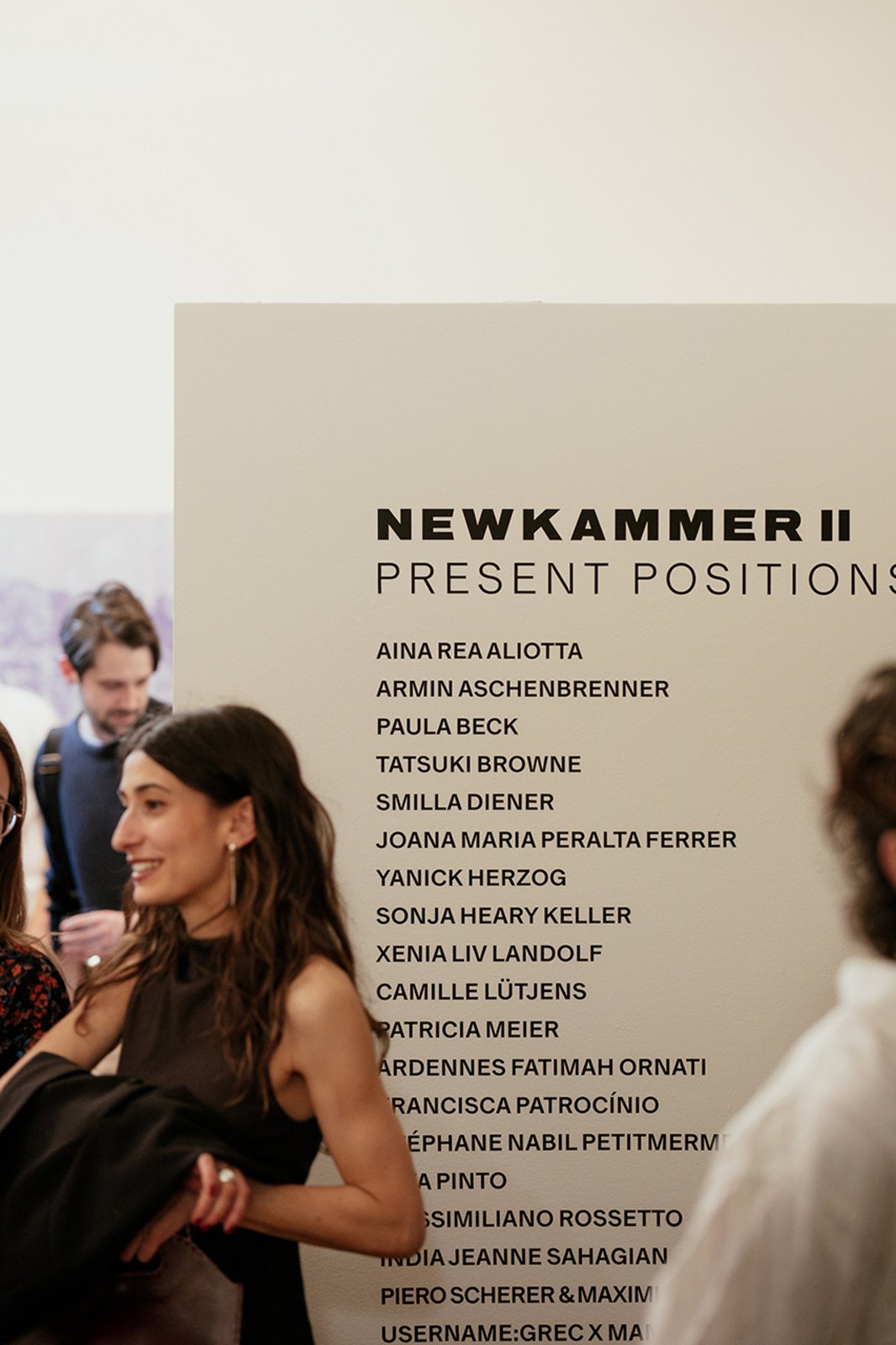
Opening NEWKAMMER II: Present Positions, Atelier Righini-Fries, Zurich, April 2026
© Gabriel Bienz
Founders Night 2024
© Jennifer Anger, ZHdK
Founders Night 2024

Falling Walls Lab Switzerland

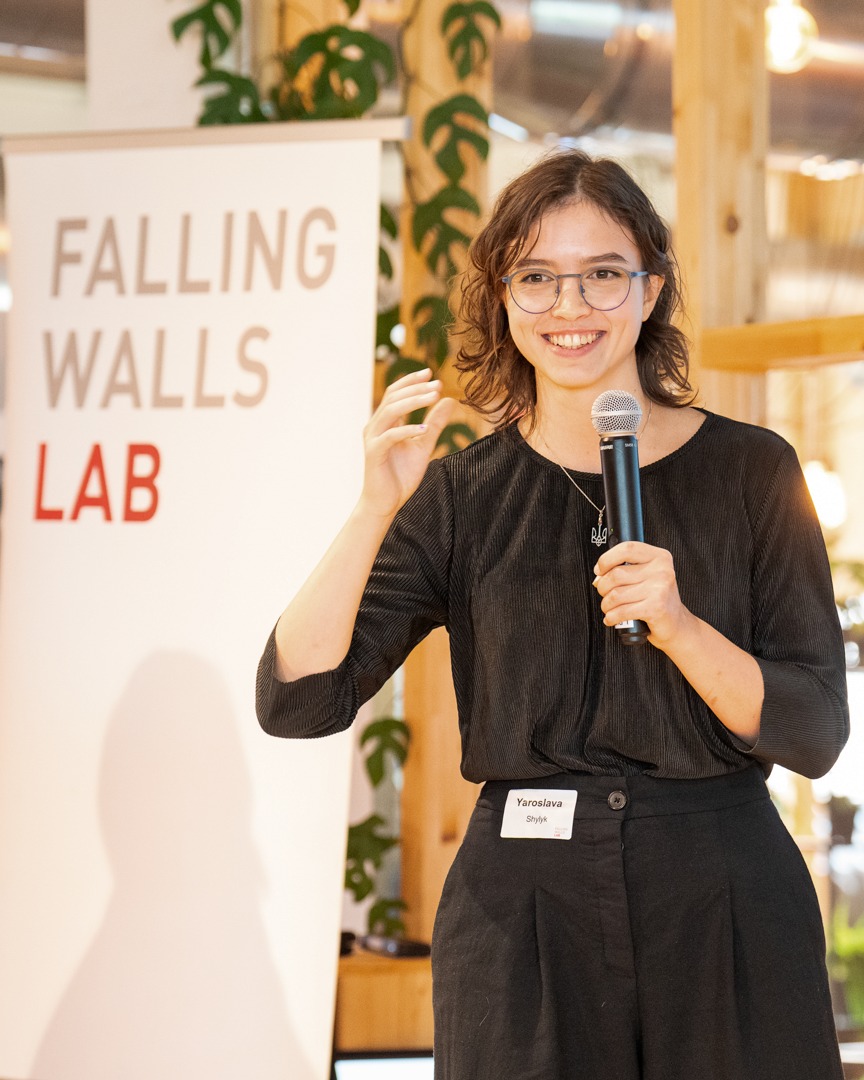
An annual pitch competition for breakthrough ideas across all disciplines, jointly organized by ETH Zurich, University of Zurich, ZHAW, Empa, University of St.Gallen, and ZHdK. Three minutes to convince an interdisciplinary jury that your project can "break a wall."

The Z-Kubator encourages applications from ZHdK members and serves on the jury – making sure creative innovation is represented alongside science and technology. Winners advance to the international finals in Berlin. Past winners from ZHdK: 2016 PooPac (3rd place) and Plunder Planet / Sphery (Audience Award), 2018 Project Circleg (1st place), 2025 Chornozem (1st place).

Empa ETH Zürich next by University of St.Gallen University of Zurich ZHAW ZHdK
Yaroslava Shylyk pitching at Falling Walls Lab Switzerland
© Jasmin Frei

Innovators Camp

Five days. Two universities. One prototype. An interdisciplinary sprint where designers, engineers, and business students tackle social innovation challenges.

An intensive innovation sprint bringing together 20–23 students from ZHdK and UZH. In interdisciplinary teams, designers, engineers, and business students collaborate on real-world challenges – from climate adaptation to ageing societies. Five days from idea to finished prototype. Starting in 2027, the course will be integrated into the Entrepreneurship Minors of both universities as an elective.

UZH Innovation Hub ZHdK
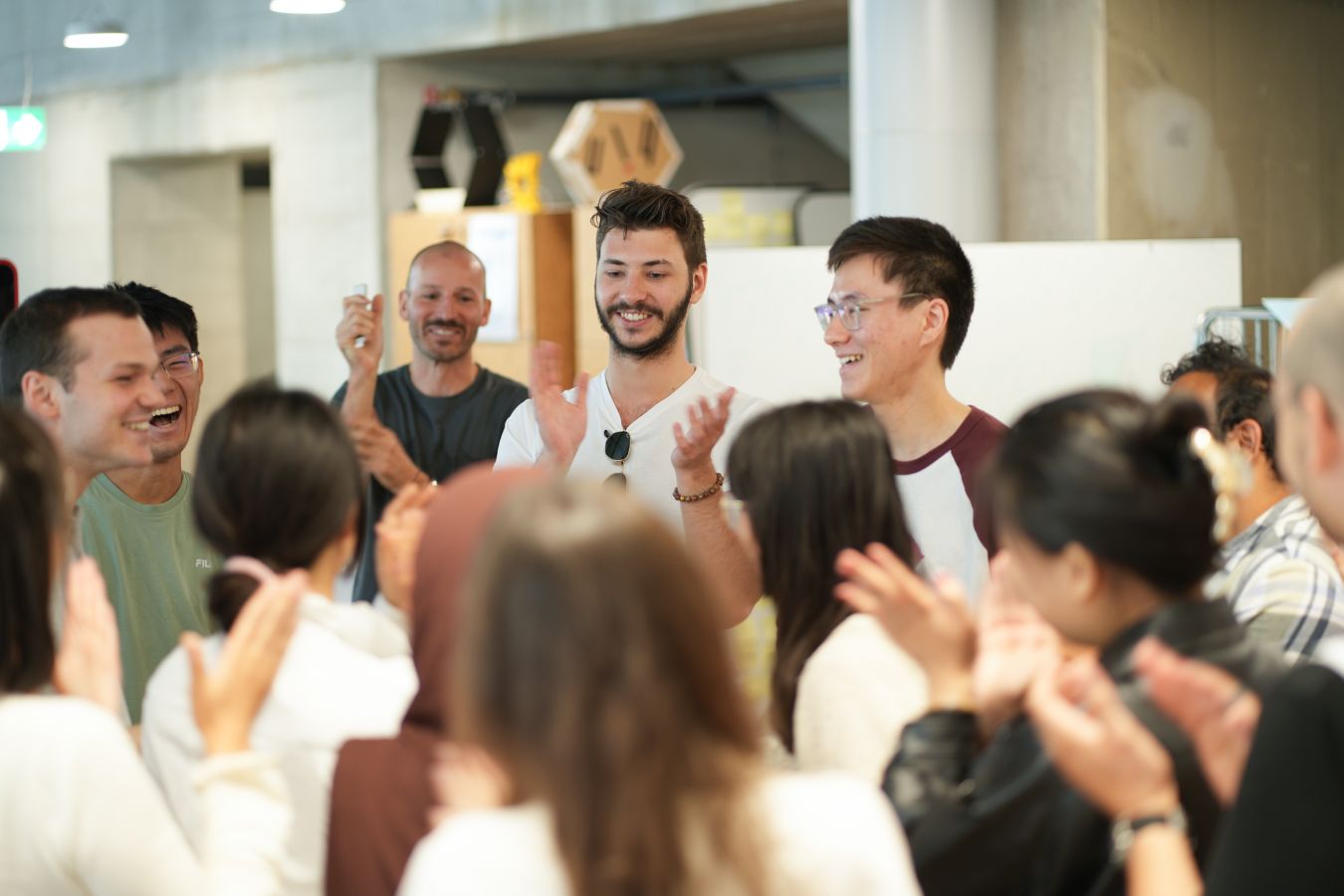
Innovators Camp participants applauding

Startup Campus

From "Business Ideas" to "Business Growth" – structured entrepreneurship modules connecting ZHdK creatives with the Swiss startup ecosystem.

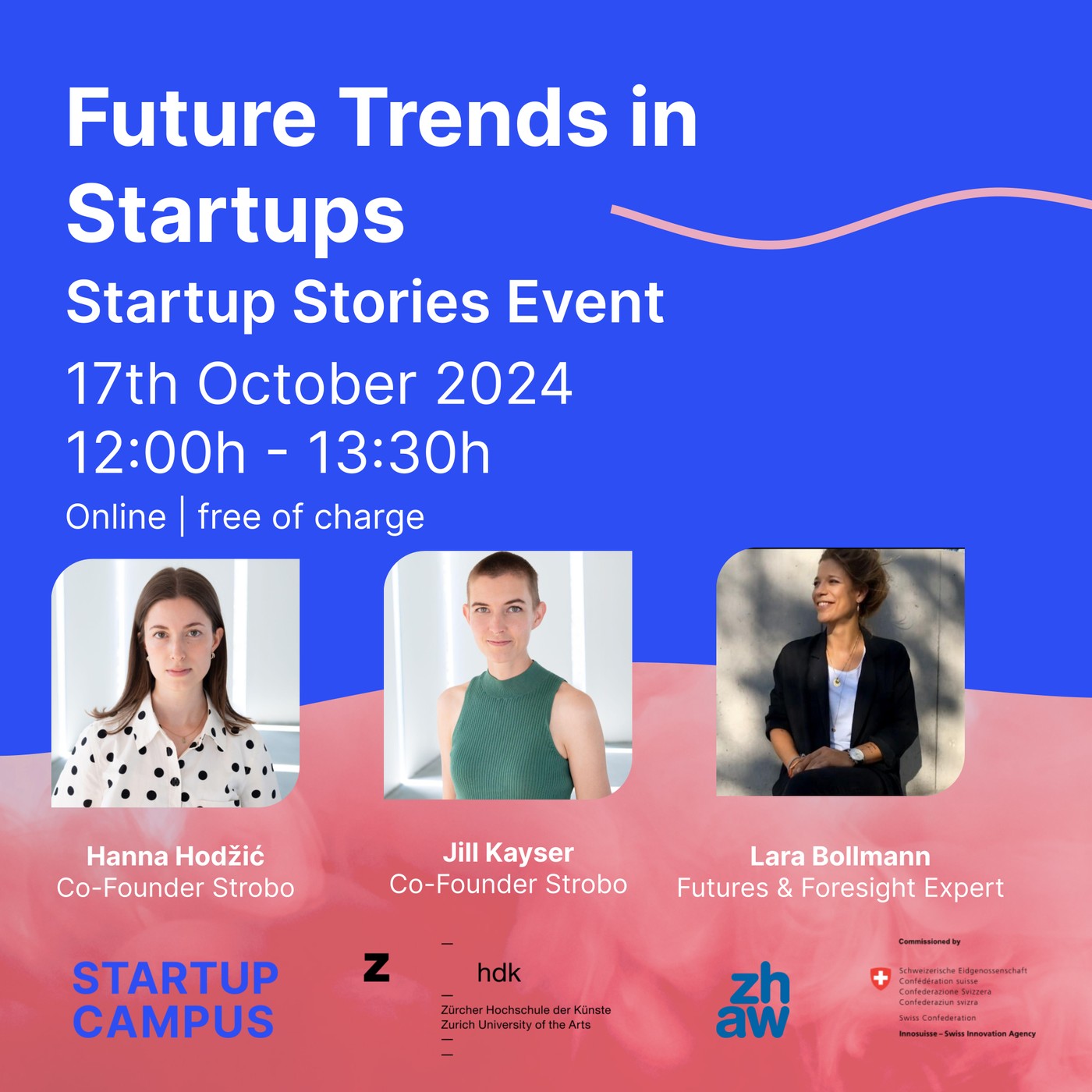
Startup Campus offers a progression of Innosuisse-backed training modules – from motivational "Business Ideas" events to the intensive "Business Concept" course and advanced "Business Creation" and "Business Growth" programmes. Z-Kubator participants gain access to business model workshops, market validation tools, and a founder network that spans far beyond the arts. In annual events the programme is advertised to ZHdK members and founders' stories are shared.

Startup Campus Impact Hub Innosuisse
Startup Campus – Future Trends in Startups event, October 2024

Founders Community

Tracking founders' activities in the ZHdK ecosystem, within and beyond the Z-Kubator's own programmes.

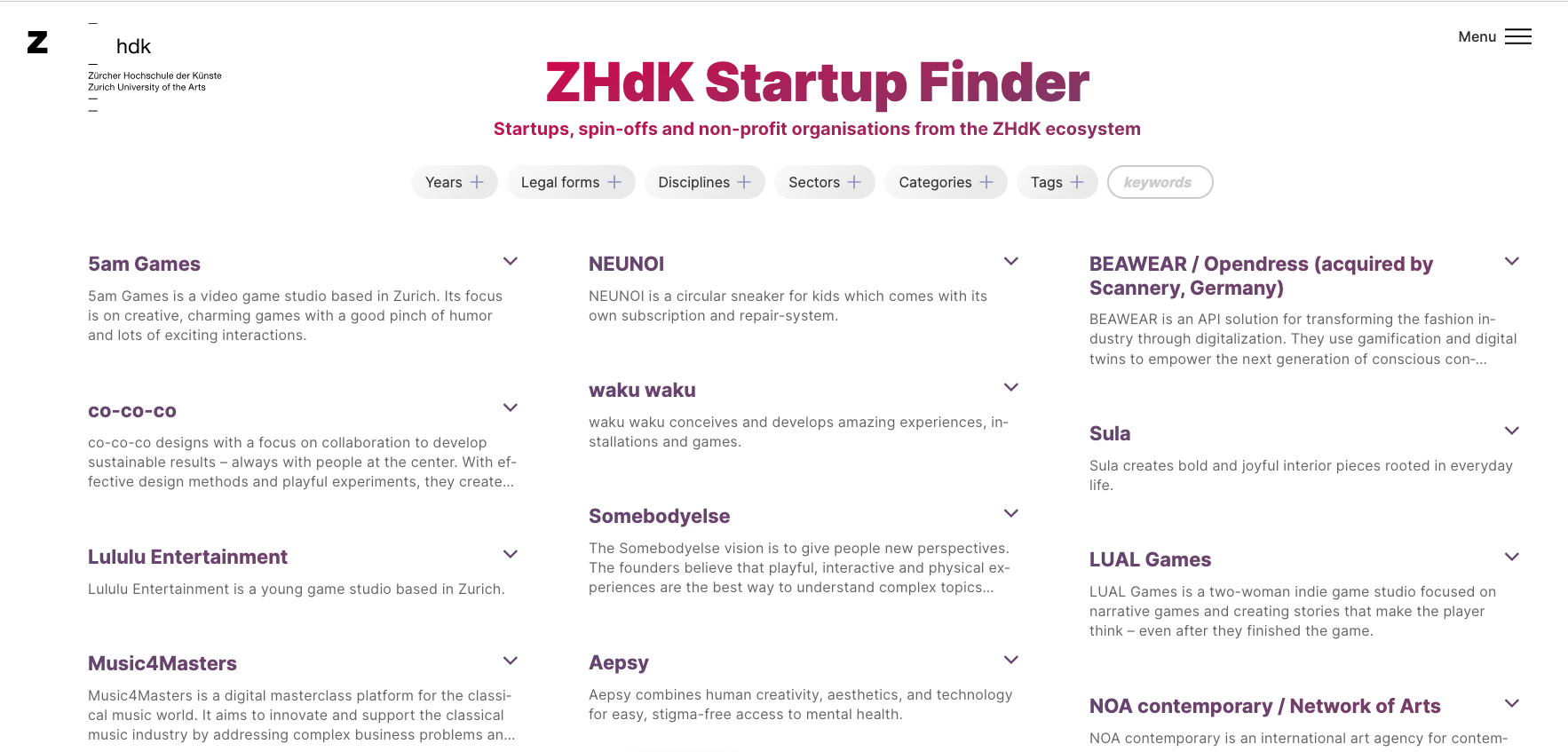
The Z-Kubator monitors founders' activities in the ZHdK ecosystem within and beyond its own programmes. The purpose of the public online database ZHdK Startup Finder is to show the innovative potential and diversity of founders from the ZHdK who generate cultural, social, ecological, and economic impact. It contains data on 43 startups and 25 spin-off companies founded by ZHdK members and alumni since 2011.

4.7
Incorporations per year
50%
Female (co-)founders
42%
Interdisciplinary teams
ZHdK Startup Finder – public online database
Barbara Basting, Stadt Zürich Kultur
Barbara BastingLeitung Ressort Bildende Kunst · Stadt Zürich KulturHead of Visual Arts · Cultural Department of the City of Zurich
Partner Voice
Der ZHdK-Inkubator bietet unter anderem die Möglichkeit, angehenden Künstlerinnen und Künstlern Einblick in die Förderpraxis einer Kulturabteilung wie jener der Stadt Zürich, spezifisch im Ressort Bildende Kunst, aber auch darüber hinaus zu geben. Aus Erfahrung wissen wir, dass es nicht einfach ist, sich einen Überblick über die Förderung, deren Angebote und Spielregeln zu verschaffen. Ich bin daher sehr froh, dass es eine solche Plattform gibt, weil wir hier in unkomplizierter und persönlicher Weise über die öffentliche Kulturförderung informieren können.

Wichtig ist dabei auch, dass der Austausch keine Einbahnstrasse ist: Wir lernen aus den Fragen und Rückmeldungen der Künstler*innen jeweils viel über deren aktuelle Bedürfnisse und lassen diese in die Anpassungen und Verbesserungen unserer künftigen Fördergefässe einfliessen.
The ZHdK incubator offers, among other things, the opportunity to give emerging artists insight into the funding practices of a cultural department such as the City of Zürich’s. We know from experience that it is not easy to get a clear picture of the funding landscape, what it has to offer, and the rules of the game. I am therefore very glad that such a platform exists, because here we can provide information about public cultural funding in an uncomplicated and personal way.

It is important that this exchange is not a one-way street: we learn a great deal from the artists’ questions and feedback about their current needs, and we incorporate this into improvements to our future funding schemes.
Barbara Basting
Leitung Ressort Bildende Kunst · Stadt Zürich KulturHead of Visual Arts · Cultural Department of the City of Zurich
Alumni Stories

From Z-Kubator to the World

10 Years, 40 Voices

We asked 40 alumni what our programmes gave them. They answered in their own words.

Meet all 40 alumni and see what they make now
© India Demirci
Michelle Tschumi, Zürcher Kantonalbank
Michelle TschumiLeiterin Start-up · Zürcher KantonalbankHead of Start-up Finance · Zürcher Kantonalbank
Partner Voice
Gratulation zum 10-jährigen Jubiläum des Z-Kubators! Der Z-Kubator ist ein inspirierendes Beispiel dafür, wie die Verbindung von Kreativität und Unternehmertum die Innovationskraft stärkt. Die Zürcher Kantonalbank ist stolz, von Anfang an Teil dieser Erfolgsgeschichte zu sein. Gemeinsam setzen wir uns dafür ein, die Innovationskraft des Kantons Zürich zu stärken und die Kreativwirtschaft als wichtigen Treiber für die Zukunft zu fördern.Congratulations on the 10th anniversary of the Z-Kubator! The Z-Kubator is an inspiring example of how combining creativity and entrepreneurship can boost innovation. Zürcher Kantonalbank is proud to have been part of this success story from the very beginning. Together, we are committed to strengthening the innovative capacity of the Canton of Zurich and promoting the creative economy as a key driver for the future.
Michelle Tschumi
Leiterin Start-up · Zürcher KantonalbankHead of Start-up Finance · Zürcher Kantonalbank
Bild: Copyright ® ZKBPhoto: Copyright ® ZKB
Dr. Kathrin Frauenfelder, Stiftung Righini-Fries
Dr. Kathrin FrauenfelderPräsidentin Stiftung Righini-FriesPresident · Righini-Fries Foundation
Partner Voice
Die Stiftung Righini-Fries unterstützt das Z-Kubator-Förderprogramm, weil es wichtig ist, junge kreative Talente beim Einstieg in die Berufswelt zu begleiten. Denn heute genügt es nicht mehr, Ideen zu entwickeln und Werke zu realisieren: Kunstschaffende müssen auch ihre Sichtbarkeit strategisch gestalten, Netzwerke aufbauen, ihre Arbeiten vermitteln und ihren Wert behaupten. Kunst entsteht nicht nur im Atelier, sondern auch in der Positionierung der eigenen Praxis in einer komplexen Welt.The Righini-Fries Foundation supports the Z-Kubator support programme because it is important to support young creative talents as they enter the professional world. After all, it is no longer enough simply to develop ideas and create works: artists must also strategically manage their visibility, build networks, communicate their work and assert its value. Art is created not only in the studio, but also through the positioning of one’s own practice within a complex world.
Dr. Kathrin Frauenfelder
Präsidentin Stiftung Righini-FriesPresident · Righini-Fries Foundation
Tobias Gutmann, installation view, Klaipeda, Lithuania, 2025
Tobias Gutmann, installation view, KKKC, Klaipéda, Lithuania, 2025

The People Behind Z-Kubator

A small, dedicated team, and a growing network of coaches, mentors, and experts who make the programmes possible.

The Z-Kubator team 2026

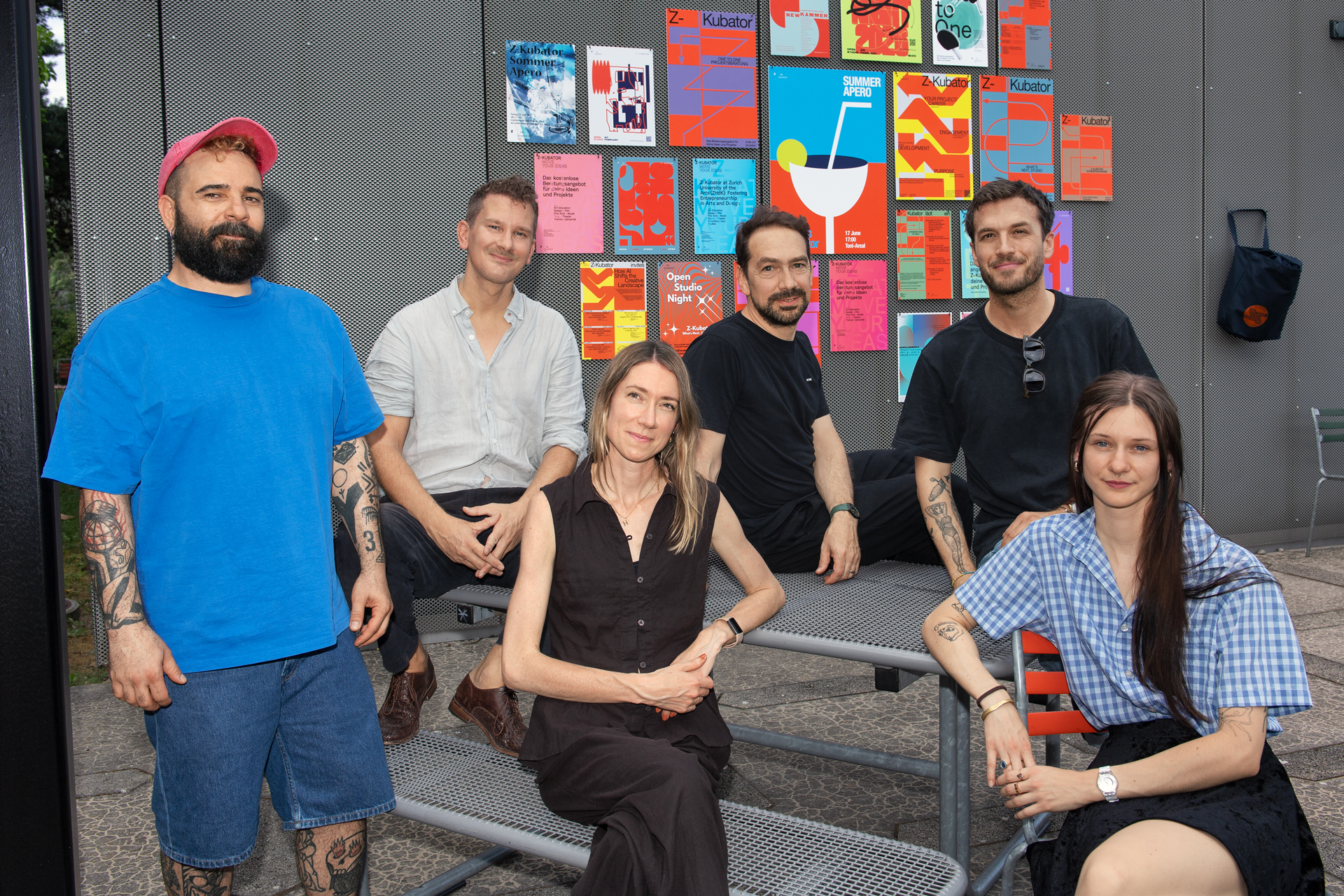
The Team 2026, from left to right: Itay Blaish, Claudio Bucher, Malin Fluri, Philipp Kotsopoulos, Yves Burgener, Maxine Erni.
Photo: © Guillaume Musset, ZHdK

Outlook

The Z-Kubator's first decade was about building, programmes, partnerships, a network. The second decade will focus on consolidation and depth. Three priorities stand out:

01

Curriculum integration.

The launch of the Minor "Entrepreneurial Thinking & Action" in 2024 was a turning point. For the first time, entrepreneurial competencies are embedded in the regular curriculum at a Swiss arts university. Expanding this into further departments and programme formats will be a central ambition.

02

Impact measurement.

With 154 alumni, 68 start-ups and spin-offs, and CHF 2.5M+ in fundraising, the quantitative evidence is strong. The next step is to develop more nuanced ways of tracking long-term career trajectories and societal impact – beyond financial metrics alone.

03

Ecosystem development.

The collaboration network, from Zürcher Kantonalbank and the City of Zurich to Impact Hub, Startup Campus, and 14 international partners, is the Z-Kubator's greatest structural asset. Deepening these partnerships, particularly at the intersection of creative industries and technology, will define the next phase.

Imprint & Acknowledgements

Publication
The First Ten Years of Z-Kubator
2016–2026

Publisher
Z-Kubator, Zurich Centre for Creative Economies (ZCCE)
at Zurich University of the Arts (ZHdK)

Concept & Editorial Direction
Philipp Kotsopoulos, Claudio Bucher

Texts
Karin Mairitsch, Christoph Weckerle, Philipp Kotsopoulos, Simon Grand, Claudio Bucher

Photo Credits
Itay Blaish, Sophie Herfort, Noëlle Guidon, Jonathan Ospina, Richard Blasko, Marcel Rickli, David Schelker, Jennifer Anger, Jasmin Frei, Gabriel Bienz. Additional images courtesy of the alumni and partners featured.
Acknowledgements

This publication would not have been possible without the sustained commitment of our partners and supporters.

Principal Partner
Zürcher Kantonalbank

Programme Partners
City of Zurich, Cultural Affairs
Stiftung Righini-Fries

Special Thanks
To the entire network of 400+ coaches, mentors, experts, jury members, guest speakers, and collaborators who have contributed their time and expertise over the past ten years.

Above all, we thank our students and alumni – the aspiring and practicing artists, designers, and creative entrepreneurs whose work gives this publication its reason to exist.

Legal Notices
The Terms of Use of Zurich University of the Arts apply.
zhdk.ch/en/legal-notices

© 2026 Z-Kubator, Zurich Centre for Creative Economies (ZCCE), Zurich University of the Arts (ZHdK),
Pfingstweidstrasse 96, 8005 Zurich, Switzerland
zhdk.ch/zkubator